Life is Just a Bowl of COTSWOLD Cherry Pie – Recipe and Lyrics 

Cherry pie for twitter

Life is Just a Bowl of (Cotswolds) Cherries………

It’s fresh cherry season in the Cotswolds right now so don’t miss out  – it doesn’t last long.
My husband Randall Montgomery who takes all the lovely photos in my book
Cotswolds Memoir
 (on Amazon) and on my web site makes just one pie a year – and he
waits for the Cotswolds cherries which are particularly juicy and flavourful.
Here’s the recipe for this delicious cherry pie.

Ingredients:

2 Pre-made Shortcrust Pastry Shells
2 lbs Freshly picked cherries (Cotswolds Cherries if possible)
2 tbls Brown Sugar
1 Egg-white beaten with a tsp of water

Method:

Pre-heat oven to 300 degrees F (150 C or gas mark 2)
Pit the Cherries, place in a saucepan sprinkle with Brown Sugar, stir,
cover and stew on low heat for 20 minutes stirring occasionally
While the cherry mixture is cooking,  roll out one Shortcrust Pastry Shell and place in 9″ pie pan
Prick the bottom of the shell with a fork and Bake for 20 Minutes

While the bottom shell is baking roll out the second Shortcrust Pastry to the thickness of a 10p coin and
with a pizza wheel or sharp knife cut the Pastry in 3/4″ strips 10″-12″ long

After baking, remove the first crust from the oven and use a slotted spoon to spoon the cherries into it
reserving the excess juice to use later (possibly as an ice cream topping)
(for decoration reserve one particularly large cherry to place on the top of the pie)
Now brush the egg mixture around the edge of the bottom crust and
use the strips of the second rolled out pastry to form a lattice work top as per this video below:

HOW TO WEAVE LATTICE PASTRY

Brush on more of the egg mixture, coating the top of the pie and sprinkle with Brown Sugar
Place in the oven and bake for an additional 30-40 minutes or until the pastry is golden brown

Life is Just a Bowl of Cherries

by Ray Henderson and lyrics by Buddy G. DeSylva and Lew Brown, published in 1931.
Ethel Merman introduced this song in George White’s Scandals of 1931.
Rudy Vallee‘s version, recorded it in 1931, stayed five weeks in the top 10 pop music charts.

Life is just a bowl of cherries
Don’t take it serious,
Life’s too mysterious
You work,
You save,
You worry so
But you can’t take your dough
When you go, go, go

So keep repeating “It’s the berries.”
The strongest oak must fall
The sweet things in life
To you were just loaned
So how can you lose
What you’ve never owned

Life is just a bowl of cherries
So live and laugh, aha!
Laugh and love
Live and laugh,
Laugh and love,
Live and laugh at it all!

Cotswolds Memoir_DizWhite

New! Cotswolds Memoir is now available as an AudioBook in addition to Paperback and Kindle

Click below to order
a.com_logo_RGB  


 amazon
A portion of the proceeds of every copy of  COTSWOLDS MEMOIR: is donated to Cotswold conservation institutions.

Cotswolds Memoir Excerpt Celebrating Laurie Lee’s Centenary Year

Laurie-Lee-007

Laurie Lee

Laurie Lee, author of Cider With Rosie, widely thought to be England’s greatest pastoral writer, was born 100 years ago this coming June.

Below is an except from Diz White’s travel/humour book Cotswolds Memoir which describes her meeting Laurie’s widow Katherine and his daughter Jessy as she explored Laurie’s birthplace in Slad.

NEW! Just Released: AUDIO BOOK of Cotswolds Memoir  Discovering a Beautiful Region of Britain on a Quest to Buy a 17th Century Cottage. (Available on Amazon and iTunes)

See Press Release of newly released Audio Book of Cotswolds Memoir below.

EXCERPT ABOUT LAURIE LEE FROM COTSWOLDS MEMOIR

To buck ourselves up we set off early the next morning for a walk that I had wanted to take since reading the charming book Cider With Rosie, which was written by one of England’s greatest pastoral writers, Laurie Lee. This author is not that well known in the US but in England his books are now required reading in many schools. Cider With Rosie, in which Laurie Lee describes his childhood and coming of age, is one of my favourite books and is set where the author was raised, in the village of Slad, just a couple of miles north of Stroud. The Woolpack (Laurie Lee’s local pub), the cottage in which he lived as a child and the village school he attended are all situated along the main street, which is little more than a country lane.

The surrounding Slad Valley has such steep terrain that modern farming machinery cannot be used there and all the farming is still done in the traditional manner. This has made the village, set in this isolated valley, feel like the land that time forgot. As we drove through it we glimpsed the incredible views from Swift’s Hill, which we were glad to see were included in our walk.

When we reached Slad we naturally stopped first at the Woolpack, a two-storey stone inn dating from the sixteenth century, whose name acknowledges the tremendous wealth generated by the wool merchants through the centuries. Nowadays, however, it is associated mostly with Laurie Lee. His curious readers often visit to see the seat that was always saved by the publican solely for Laurie. This is next to his signed portrait and a pile of his books for sale.

The Woolpack pub, Slad

The Woolpack Pub, Slad

While Randy got our drinks, I hunted through this stack for a book that I had been unable to find anywhere else. It was entitled Two Women and primarily featured photographs that Laurie Lee had taken of his wife and daughter. This book wasn’t included in the pile of books and the publican didn’t have a copy of it, but promised to produce it by the time we’d finished our walk.

Several of the locals heard this exchange and as we drank our pint of beer they told us stories about this famous author. One old boy talked about the time, several years earlier, when a school bus came by and stopped right by Laurie Lee, who was sitting outside the Woolpack, basking in the sun. A school kid leaned out of the bus window.

‘Does anyone know where Laurie Lee is buried?’ he asked.

Laurie replied, ‘Well, he’s usually buried right here in the pub.’

When he finally died a few years later, he was laid to rest, at his request, in the churchyard opposite. He wanted to be positioned to have a good view of the pub and he got his wish.

Grave

The view from Laurie Lee’s Grave

We left the old boys laughing over their recollections and set off on our walk. We strolled downhill from the pub until we found a footpath to Slad Brook in the bottom of the valley, then set off for the hillside, passing the Elliot Nature Reserve on the way, and followed the path to Swift’s Hill high above us. It was a steep climb with only one place to rest before the top. But, once we got there, what a view! It was a sparklingly sunny day and we immediately forgot the exertion of our climb as we looked around. The steep slopes of the Slad Valley and the rolling hills beyond were dotted with sheep and cattle. In the distance we spotted the tiny hamlet of Elcombe nestled in the hillside, its stone cottages framed by the valley’s slopes. We stood on the top of the hill for a long time in the sun and the breeze as we drank in the spectacular views, feeling as though we were on top of the world.

Finally, we descended down Knapp Lane, through Elcombe, past signs to Furness Farm and took a lane that turned sharply to the right. This led us to a track that took us downhill through Redding Wood and into the Slad Valley. The cool dark mustiness of Redding Wood after the bright windy hilltop was a wonderful contrast and we really enjoyed its mysterious, gloomy atmosphere. It was like something from a Tolkien novel. We continued through the trees, downhill past Slad Brook until the track joined Steanbridge Lane and returned us to the Woolpack.

Our walk had taken us on a journey of over two strenuous miles and so we were very hungry for lunch. This was our lucky day – a Sunday actually – because a whole lamb was being barbecued in the pub garden and served for the traditional Sunday lunch, which is always more of a feast in England than any other meal. The scent of the lamb, slathered in garlic and rosemary, wafted up to us from the garden and drove us into a lyrical homage to all sheep everywhere. When it was served it tasted like ‘heaven on a stick’ – my highest compliment. It came with all the trimmings, including mint sauce, a sage dressing, cauliflower cheese, and, of course, roast potatoes.

After lunch the publican beckoned to us from behind the bar. He smiled and said our book would be arriving soon. A short while later, as we finished our coffee, two women walked into the pub and I was thrilled when the publican introduced us to Laurie Lee’s widow Katherine and his daughter Jessy. They had brought Laurie’s book Two Women with them.

I purchased the book and, after signing it, they sat chatting with us for quite a while. When it was time to leave, Katherine told us exactly where to look for the cottage that Laurie Lee had lived in as a child and after we said goodbye we wandered along the main street until we found it set below the road down an embankment nearby. It was fascinating to see the actual setting of Laurie’s book and imagine him living there as a small boy.

Rosebank

Rosebank Cottage

As we left the beautiful Slad Valley we decided that our visit there had been one of the highlights of the summer. If the reader hasn’t already come across Cider with Rosie, I highly recommend it.


Cotswolds Memoir Cover-2

For Immediate Release

NEW! Audio Book

of

COTSWOLDS MEMOIR

Discovering a Beautiful Region of Britain

on a Quest to Buy a 17th Century Cottage

by Diz White

                    Narrated by the Author/Actress – performing 70 Characters

 Amazon ASIN number: B00K5KD7NW 
Co-Produced & Directed by EMMY AWARD WINNER Marsha Goodman

“Diz White writes about the Cotswolds with such passion. Superb story telling.”

Debbie McGeeBBC

“Extremely entertaining, funny and beautifully written”

Katie Jarvis, Cotswold Life Magazine

The ultimate laugh-out-loud, good life, house-hunting, foodie, travel-tour, meet the eccentric locals, roller-coaster cliff hanger, fun memoir. A love note to the Cotswolds, one of the most beautiful regions of England.

The story began when Award-winning comedy actress Diz White found herself craving Yorkshire Pudding at every meal, knowing that her roots were pulling her back from the glitz and glamour of Hollywood to her homeland in the UK. After a holiday in the Cotswolds, with her husband, Diz was sold and the hunt was on to find her dream country cottage.

However, the search wasn’t just about finding the perfect house; it was about discovering the Cotswolds region and meeting some wonderfully eccentric country characters along the way. During her quest, Diz visited Roman settlements, Domesday Churches, archeology digs, and enjoyed river rambles, garden tours and pub hikes.

This memoir explores her journey, through a combination of laugh-out-loud moments and cliff-hanging twists, to the satisfaction of a hard won prize. Not only is Cotswolds Memoir a wonderful story, it’s also a valuable insight into some of the best ‘off-the-beaten-track’ sites and features hints and tips for buying a Cotswold cottage. Photos by Randall Montgomery

● Does for the Cotswolds what Under the Tuscan Sun did for Italy

● Doubles as an informative travel-tour of the Cotswolds

● Valuable Visitor’s Guide Included

● Laugh-out-loud Bill Bryson (Notes from a Small Island)-style humour

● Donation to Cotswolds Conservation Organizations from book’s proceeds

British-born Diz White divides her time between an acting and writing career in Hollywood – credits include Voice – How to Train Your Dragon, Titanic, Friends, Boston Legal and many more On camera: Star Trek Next Generation, Bullshot (HandMade Films) – and the Cotswolds – her passion. She wrote Haunted Cotswolds (The History Press), Haunted Cheltenham (The History Press) and produced with her husband GHOSTS OF GREAT BRITAIN COLLECTION – Haunted Cotswolds DVD (Available on Amazon).

Cotswolds Memoir (All versions) published by Larrabee Libraries, Div.of Larrabee Industries Inc.

Audio Book: Amazon ASIN number: B00K5KD7NW

Also a Paperback Original ISBN 978-0-9571162-0-7 & Kindle ISBN 978-0-9571162-1-4

To listen to a sample of the Audio Book of Cotswolds Memoir go to Amazon.com or Amazon.co.uk

To review this book or request an interview, Contact: Katie PublicityPromo@aol.com

a.com_logo_RGB     
amazon

COTSWOLDS MEMOIR Author’s video of COTSWOLD WILDLIFE PARK

A great day out with or without kids. There are animals galore, giraffes meerkats, penguins, lions, camels, reindeer and many more. A lovely restaurant (open all day) with indoor/outdoor seating means visitors can take a break while spending all day with the animals. There are scenic gardens and so much of interest. See their website for all kinds of ideas for adults and kids – like being a keeper for a day or the interactive zone. Information about conservation, education and more. There’s a gift shop and a train – the list goes on. The Cotswold Wildlife Park is situated in the lush grounds of an ancient manor house on the Bradwell Grove Estate. Owner John Heyworth has given this estate over to the zoological collection. This setting could not be more beautiful, a long drive from the park gates leads through to a great country estate and right into the animal collection. The park is framed by enormous old oak trees that surround the six hundred year old manor house. California redwoods and giant yew trees loom majestically over visitors and add even more to the many delights of this special place to visit.

Video created by Randall Montgomery

Cotswold Wildlife Park is located 2 miles south of the medieval town of Burford, Oxfordshire, on the A361

SatNav Postcode for Cotswolds Wildlife Park OX18 4JP

http://www.cotswoldwildlifepark.co.uk

by Diz White author of

COTSWOLDS MEMOIR:

Discovering a Beautiful Region of Britain on a Quest to Buy a 17thCentury CottageCotswolds Memoir Cover-2

A portion of the proceeds of every copy of  COTSWOLDS MEMOIR: is donated to Cotswold conservation institutions. Available on
a.com_logo_RGB     
amazon

Cotswolds Memoir Book Signing and Talk with Slide Presentation and Video Clips at Distant Lands Bookstore

Cotswolds Memoir_DizWhite

Logo

20 S. Raymond Ave. Pasadena, CA

Monday, April 7th @ 7:30 P.M.

RSVP to 626 449 3220

British-born writer and comedy actress Diz White describes how she came to write her travel-humor book COTSWOLDS MEMOIR: Discovering a Beautiful Region of Britain on a Quest to Buy a 17th Century Cottage. Amusing anecdotes about her roller-coaster search for a cottage, as she scrambled between Hollywood and Gloucestershire, are interwoven with a slide show of gorgeous pictures of this scenic region and video clips of little known historic treasures of off-the-beaten-track Cotswolds


WILD about the Cotswolds? 10 WILD Cotswold Ideas to EAT, STAY, ENJOY

Kiftsgate2
  • The WILD Rabbit Country Pub and Rooms
  • WILD Thyme Inn and rooms
  • The WILD Duck Inn
  • WILD Air Bed and Breakfast
  • WILD Garlic Restaurant and Rooms
  • WILD Camping at the Tunnel House Inn
  • WILD Rock Climbing
  • WILD Swimming
  • WILDLife Trust
  • Cotswold WILDLife Park and Gardens
“Where do you recommend we go when we get there?” is a frequent question and this gave me the idea of putting together ‘I’m just WILD about the Cotswolds list of great places to eat, stay and enjoy in this lovely region together with descriptions and contact info.

WILD about the #Cotswolds? 10 WILD Cotswold Ideas to EAT, STAY, ENJOY

WildRabbit-guestroom

The WILD Rabbit near Stow-on-the-Wold in the charming and tranquil village of Kingham

The Cotswold stone building that houses The Wild Rabbit dates from 1750. After a thorough and very tastefully done renovation, The Wild Rabbit opened in September of last year.

Typical Sunday lunch menu includes starters such as potted rabbit, pickled vegetable salad and crab and scallop cannelloni and crab bisque.

Mains might include: roast rump of beef, poached tongue, bone marrow, and all the trimmings or skate wing, braised celery with beurre noisette

All the bedrooms are individually decorated and named after woodland animals. There are twelve in all,  four of which are garden rooms and dog-friendly.

theteam@thewildrabbit.co.uk

The Wild Rabbit, Church Street, Kingham, Oxfordshire OX7 6YA

01608 658 389

www.thewildrabbit.co.uk

Wild Thyme

WILD Thyme Inn and Rooms in Chipping Norton

Ideal if you want to indulge in the restaurant and simply stagger up to bed, or if you are looking for a base to explore the Cotswolds – three stylish rooms are located within this charming 400 year old, Grade 2 listed building.
The rooms are double bedded and en-suite with all the usual facilities. Breakfast is a substantial continental, served in the restaurant, or in your room.
Nick and Sally own and personally manage Wild Thyme Restaurant with Rooms and there is space for 35 diners. It is possible to hire the whole restaurant for exclusive use, or The Garden Room, which seats up to 14 people, for a smaller celebration.
Many original features have been retained within the Cotswold stone walls and a wonderful window seat blends perfectly with more contemporary elements to create a stylish decor.
A typical starter might include: Oven baked buckwheat blinis, Upton smoked salmon, lemon prawns and hollandaise.
Pan fried filet of Cornish mackerel, parmesan, parsnip puree, sauté girolles and crispy pancetta.
A main course might include: Barrington Estate partridge; roasted breast, ragout ravioli, savoy cabbage, roasted celeriac, girolles, crispy pancetta, Madera cream, game jus or
Pan roasted Cornish brill, Brixham mussels, truffle mash, baby spinach, parsley root and chives

The WILD Thyme Restaurant and Rooms, 10 New Street, Chipping Norton
Oxfordshire
OX7 5LJ
enquiries@wildthymerestaurant.co.uk
+44 (0) 1608 645060
www.wildthymerestaurant.co.uk

the-wild-duck-inn-gv

The WILD Duck Inn   Ewen near Cirencester

This charming twelve bedroom 16th Century Inn is situated near the River Thames in the tranquil Cotswold village of Ewen near Cirencester.

Featuring old beams and portraits, the warm dining room at The Wild Duck serves a modern European and British menu. The chefs use local, organic produce, including some meats from the Prince Charles’ Highgrove Estate. The Post Horn Bar serves traditional ales and wine.

Surrounded by the Cotswold Water Park, The Wild Duck Inn is close to 80 different lakes. Local activities include fishing, jet-skiing and sailing, and Cirencester is just 3 miles away

Some of the individually designed rooms have a stylish 4-poster bed, and all have tea/coffee facilities. The Grouse Room lounge has a cozy fireplace, and there is free Wi-Fi in the public areas. The Wild Duck Inn offers elegant rooms with flat-screen TVs and DVD players. There is a garden terrace for open air dining.

Click here for booking with Trip Advisor

wild-air-bed-breakfast

WILD Air Bed and Breakfast

This delightful but affordable high-end Bed and Breakfast, more like a luxurious hotel actually, is close to Minchinhampton and Nailsworth. There is also accommodation available in a separate apartment. There are all the mod cons, fluffy towels and so on and a full English breakfast, locally sourced, is served either in the garden room or on the terrace.

Brendan and Kay Clements
Wild Air
Church End, Hampton Green, Nr Box, Stroud, Gloucestershire GL6 9AD
01453 887376
07966 031580
stay@wildaircotswolds.co.uk

www.wildaircotswolds.co.uk

wild garlic

The WILD Garlic Restaurant and Rooms

All the food is made on the premises from fresh pasta and ice cream to the daily baked organic bread. Situated above the restaurant are three Four Star AA awarded spacious rooms available for Bed and Breakfast accommodation.

Wild Garlic Restaurant and Rooms 3 Cossacks Square, Nailsworth, Glos GL6 0DB

Tel: 01453 832 615

www.wild-garlic.co.uk

tunnell_house_inn

WILD Camping in the grounds of Tunnel House Inn

Near Cirencester Gloucestershire

Wild camping available all year round for tents in the stunningly beautiful grounds of the Tunnel House Inn which are on the edge of Hailey Wood.

The unique 17th Century Tunnel House Inn is set in an idyllic rural location nestled between the Cotswold villages of Coates and Tarlton It is close to the River Thames and sits between the Thames and the Severn Canal. The relaxed and welcoming bar has a unique character as it is furnished with a vast collection of memorabilia.

Good food served all day

01285 770280 info@tunnelhouse.com

far peak

WILD Rock Climbing in the Cotswolds

Email: info@farpeak.co.uk

Telephone: 01285 721090

The facility at Far Peak has ample free parking and camping facilities. Great for families. No shop or playground but plenty of free space for ball games and for children to explore.

There is a public house within walking distance across the fields and local amenities are available in the nearby Cotswold town of Northleach.

There are miles of wonderful walks to be enjoyed in the area and lots of villages and lanes to be explored by walkers and cyclists.

Farpeak Climbing Centre (formally Wildrock)

Far Peak, Northleach, Gloucestershire, GL54 3JL

Email: info@farpeak.co.uk

farpeakclimbing.co.uk

wild swimming

WILD Swimming in the Cotswolds

Discover the best wild swim locations in Oxfordshire and the Cotswolds, whether a river swim, a lake or even a waterfall.

Find local news and events in your area, water campaigns that might interest you or join a group or a meeting of like-minded people.

Includes Cotswold wild swimming locations in the Windrush River, Near Lechlade etc.,

www.wildswimming.co.uk

wildlife trust

Wildlife Trust

Their web site has a ‘Great places to see’ section to plan a wonderful day out in the Cotswolds.

Find out about nature reserves, webcams, local wildlife sites, family Welly walks, nest box making, how to contribute to the preservation of wildlife and lots more.

www.Wildlifetrust.org

 cotswold-wildlife-park

Cotswold WILDLife Park and Gardens

A great day out with or without kids. A lovely restaurant with indoor/outdoor seating means you can take a break while spending all day with the animals. Scenic, gardens with so much of interest. See their website for all kinds of ideas for adults and kids  – like being a keeper for a day. Information about conservation, education and so much more. There’s a gift shop and a train – the list goes on.

Cotswold Wildlife Park is located 2 miles south of the medieval town of Burford, Oxfordshire, on the A361

SatNav Postcode for Cotswolds Wildlife Park OX18 4JP Look out for Bradwell Grove

www.cotswoldwildlifepark.co.uk

by Diz White author of

COTSWOLDS MEMOIR:

Discovering a Beautiful Region of Britain on a Quest to Buy a 17thCentury Cottage. Cotswolds Memoir Cover-2

A portion of the proceeds of every copy of  COTSWOLDS MEMOIR: is donated to Cotswold conservation institutions. Available on

a.com_logo_RGB     
amazon

Downton Abbey’s Portrayal of Debutante Presentation at Court by the author of Cotswolds Memoir

Presentation 2

 Lady Grantham (Elizabeth McGovern) and Lady Rose (Lily James)

Downton Abbey paints a fascinating picture of a royal presentation at court in Episode 4 of the series. The purpose of this event was for the upper class debutantes and eligible bachelors to meet and make suitable marriages.

Royals

                King George V and Queen Mary        King George V  (Guy Williams) & Queen Mary (uncredited) 

In Downton Abbey Lady Rose is presented to George V and Queen Mary. A very deep curtsey was required by a debutante as the presentation is made. Debutantes were advised to practice their curtsey and many were nervous about getting it right. Various disasters were reported with Debutantes either tumbling over or being unable to rise after the curtsey without the aid of a hastily summoned courtier.

Presentation

Lady Rose being presented at court

At the presentation a debutante would be announced to the King and Queen and after a curtsey would make her exit, stepping away from the Royals without turning around, in order not show her back.

A court presentation signaled the beginning of the social season in Britain and Debutantes were required to have a sponsor. It was mandatory that this sponsor be someone who had already been presented to the King and Queen.

Linnie Irwin Sweeney, left, and Elsie Irwin Sweeney in 1923.

Linnie Irwin Sweeney, left, and her daughter Elsie Irwin Sweeney being presented at court in 1923

Court dress followed prescribed tradition, with most girls wearing white evening dresses, although pastel shades where also in order. Three ostrich feathers attached to a veil adorned the debutante’s hair and pearls and jewelry borrowed from family heirlooms were traditionally worn.

Debutantes were chaperoned at dances by any female member of the family who could be induced to volunteer. Many a great-aunt would fall asleep in the small gilt chairs that were provided at these formal balls while the Debutante in her charge would often secretly slip away unnoticed to a nightclub. To many a young girl this would be a far more exciting prospect than a society ball.

George V portrait

King George V

A Sovereign presentation was designed to show off a Debutante as she entered society for the first time and to keep her selection of a husband confined to an elite, upper class circle. There was a lot of pressure on Debutantes to find their future husband at the various balls and entertainments during the first season of her presentation. But sometimes this was not possible and a second or even third season was needed to accomplish this goal.

In addition to the balls there were many other chances for Debutantes to meet a suitable prospective husband such as polo matches, Royal Ascot, tea parties, Thé Dansant and a Debutant’s own coming out party. This festivity was sometimes shared with a sister or cousin to defray expenses.

Presentation 3

Court presentations were removed from the court calendar in 1958 by Queen Elizabeth II,  and attempts by society to continue them without royal patronage were unsuccessful.

This little bit of history portrayed so charmingly in these scenes in Downton Abbey are all the more interesting because, as mentioned, the ritual of court presentation is now no more.

by Diz White author of

COTSWOLDS MEMOIR:

Discovering a Beautiful Region of Britain on a Quest to Buy a 17thCentury Cottage. Cotswolds Memoir Cover-2

A portion of the proceeds of every copy of  COTSWOLDS MEMOIR: is donated to Cotswold conservation institutions. Available on

a.com_logo_RGB     
amazon

Cotswolds Memoir author writes of Downton Abbey featuring the Prince of Wales and Freda Dudley Ward

Dancing Lady Rose, (Lily James) dances with the Prince of Wales (Oliver Dinsdale)

The Prince of Wales’ first love affair is alluded to in the storyline of Downton Abbey, however the real-life characters that are portrayed are just as fascinating as the action on the screen.

David
Edward VIII

The Prince of Wales, later King Edward VIII, was the King of England for less than a year before he abdicated to marry Wallis Simpson. But before the king met her he had an affair with the textile heiress and socialite Freda Dudley Ward.

Fredas

                      Freda Dudley Ward                  Freda Dudley Ward (Janet Montgomery)

This affair, although of long duration, was one among many and Edward’s womanizing and reckless behavior so alarmed his father George V that the King talked openly of not wanting his first-born son to inherit the crown. “After I am gone”, George announced, “this boy will ruin himself within twelve months”.

3
Edward, Freda and her husband William Dudley Ward

The love affair between Edward and Freda Dudley Ward, (married to the liberal Member of Parliament William Dudley Ward), had begun over five years earlier in 1918 during a First World War Zeppelin Raid. Edward had hurried into a doorway as the bombs dropped around him and encountered Freda who had already taken shelter there. At the time Freda had two daughters and Edward subsequently became very fond of them. Her husband, sixteen years her senior, after discovering the affair, allowed the relationship to continue. Although the liaison was never referred to in the press it was an open secret among the upper classes.

Frieda and Rose
Lady Rose, (Lily James) and Freda Dudley Ward (Janet Montgomery)

Edward, or David as he was called by his close friends and family, considered himself the first ‘modern’ royal and participated fully in the nightlife of the nineteen twenties and thirties. He visited the Embassy Club and many other restaurant and dance clubs, which no royal had ever done before.

Edward met Freda Dudley Ward when he was twenty three years old and after an on and off again affair, broke off their relationship upon meeting Wallis Simpson in 1934. This led to the abdication crises in 1936.

William Dudley Ward divorced his wife in 1931 and in 1937 she married the Spanish nobleman Marques de Casa Maury. That marriage subsequently ended in divorce in 1954.

Wallace
Wallis Simpson

Downton Abbey highlights an interesting glimpse of history as Freda Dudley Ward was Edward’s first serious love affair. Had he stayed with her and not transferred his affections to Wallis Simpson the course of history would have been significantly changed.

by Diz White author of COTSWOLDS MEMOIR: Discovering a Beautiful Region of Britain on a Quest to Buy a 17thCentury Cottage. Available on Amazon.

Cotswolds Memoir Cover-2

Cotswolds Memoir Author writes about Downton Abbey featuring Ambrose The 1920’s band leader

Ambrose 4

Come Back – the Embassy needs you – Edward. It was this message from the Prince of Wales in a 1925 cablegram to Ambrose, the band leader that finally persuaded him to return to England from New York. It must have been very flattering to have the heir to the British throne begging him to return to the Embassy nightclub with his band. Ambrose was in real-life, exactly as he was portrayed in a season four episode of Downton Abbey – an extremely popular band leader and violinist. He had been very much missed by the Prince while he was away from London. Only a year earlier Ambrose had left the Embassy Club for a much better offer to play at the Palais Royal in New York.

Ambrose 5

Born in the east end of London in 1896, Ambrose had divided his time between London and New York for several years before granting the Prince’s request. Eventually, after returning to the Embassy Club he moved on to the Mayfair Hotel in London where he remained for the following six years. He recorded many numbers with Decca, Brunswick and HMV helping to make him the most popular band leader of the era. Later he opened Ciro’s club and hired the legendary pianist Art Tatum and such talents as Ted Heath and Sylvester Ahola. He discovered Vera Lynn and much later Kathy Kirby.

Ambrose 3

Downton Abbey captures the glamour of this era in its scenes set in the Embassy Club and the viewer is given a fleeting glimpse of Ambrose as he plays his violin. Below are some recordings of how he sounded during the 1920s and 1930s.

If I had a Million Dollars was recorded for Decca at the Embassy Club in 1934

Dancing in the Dark was one of his popular tunes

Hullabaloo, one of Ambrose’ more uptempo numbers was recorded in 1939

Cotswolds Memoir Author writes brief history of Downton Abbey location in The Great Conservatory, Syon Park

syon-park

The ravishingly beautiful Great Conservatory in Syon Park makes an idyllic setting for Lady Mary to take tea with Lord Gillingham in the series Downton Abbey.

syon park 5

The soaring white metal work of this backdrop contrasts with the lush greenery spilling from the classic Italian planters decorating its interior, creating a gorgeously romantic scene.

syon park 3

The Great Conservatory was designed by Charles Fowler and built in 1830. A Greek cross is the theme of the tropical house and this building’s spectacular glass dome is thirty eight feet in diameter. A conservatory constructed of metal had never before been attempted and its scale is particularly impressive with a frontage of two hundred and thirty feet.

syon park 2

Syon Park’s position, on the banks of the Thames only ten miles from London, is just across the river from Kew Gardens, and attracted the talents of J.M.W. Turner whose painting Zion House, Isleworth captures its beauty.

Sir John Betjeman sang the praises of Syon House and its 200 acre park when he described it as ‘The Grand Architectural Walk’. It is the London home of the Duke of Northumberland, whose family have lived there for more than 400 years. Originally the site of a medieval abbey which was dismantled by King Henry VIII in 1539 the current building and park are now a site of Special Scientific Interest.

Syon’s Italian Renaissance exterior was built in 1547 during the tenure of the 1st Duke of Somerset but it is its famous ‘Adam style’ that distinguishes the house’s interior. This came about when lst Duke of Northumberland commissioned Robert Adam to carry out a refurbishment 1762.

syon park 6

An eclectic mix of architectural influences inspired Adam including Baroque, Mannerist Gothic and Ancient Roman styles. The Long Gallery is one hundred and thirty six feet in length and the state rooms are a must-see as they remain completely intact from the day they were built.

In its march through history Syon House has been visited by or associated with King Henry VIII, Catherine of Aragon, Lady Jane Grey and Charles I.

Syon House and Park, including the Great Conservatory, are open to the public in the summer months and there is every reason, as the 3rd Duchess of Northumberland said, to visit ‘this delicious place’.

Downton Abbey’s Jazz Singer Inspired by Scandal?

Did Scandals with Royalty and Movie Stars about the popular singer Hutch inspire Downton Abbey’s Jazz Singer character?
The actor Gary Carr’s character, Jack Ross the band leader on Downton Abbey was drawn from an amalgam of jazz singers from the nineteen twenties. He joined the cast in the fourth season of this popular series which began airing last month in the U.S.
The black singer Hutch may well have been one of the real life jazz singers who inspired this character. Hutch’s headline-grabbing life is outlined in this article below.
-Diz White

The royal gigolo: Edwina Mountbatten sued over claims of an affair with black singer Paul Robeson. But the truth was even more outrageous…

This was an episode in the London High Court that astonished even experienced members of the Bar.

The Lord Chief Justice’s court opened its doors at the unprecedented hour of 9.30am on that July day in 1932 to enable an earth-shakingly intimate and sensational libel action to be heard  –  in effect, in camera  –  before newspaper reporters even got to hear that it was happening

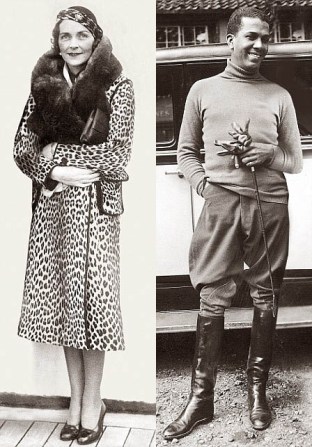
The plaintiff in the action was Britain’s richest and most publicised heiress, the bisexual Lady Louis Mountbatten, afterwards Countess Mountbatten of Burma and the last Vicereine of India.
1-2

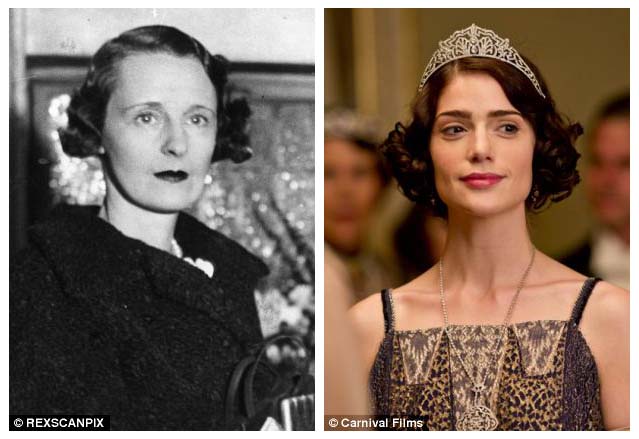
Destructive affair: Countess Mountbatten and entertainer Leslie ‘Hutch’ Hutchinson

Sitting beside her was her handsome sailor husband, the equally bisexual Lord Louis, uncle of Prince Philip, cousin of the King, great-grandson of Queen Victoria, the future last Viceroy and first Governor General of India, First Sea Lord and finally Chief of the Defence Staff.

Dickie and Edwina Mountbatten  –  whose ten-year-old ‘open marriage’ had been the subject of feverish gossip and barely suppressed scandal ever since it had begun  –  had been summoned urgently home from his latest naval posting in Malta and forced by Buckingham Palace into reluctantly issuing libel proceedings against the gossip columnist of ‘that vulgar socialist Sunday paper, The People’, as Mountbatten called it.

Seven weeks earlier, the paper had alleged ‘a scandal which has shaken society to the very depths. It concerns one of the leading hostesses in the country  –  a woman highly connected and immensely rich.

‘Her association with a coloured man became so marked that they were the talk of the West End. Then one day the couple were caught in compromising circumstances.

‘The sequel is that the society woman has been given hints to clear out of England for a couple of years to let the affair blow over and the hint comes from a quarter which cannot be ignored’.

Mayfair gossips lost no time in identifying the woman in question as Edwina Mountbatten.

When King George V saw the article, he ordered the Mountbattens to return to London immediately, and to sue for libel, in order to clear the Royal Family of the allegation that Edwina had been exiled from Britain on the orders of the Palace, and Edwina from the suggestion that she had a black lover.

Cables from Buckingham Palace rained down upon the Mountbattens. ‘Coded messages galore,’ wrote Edwina, ‘and really nearly going mad (three months’ gossip to the effect that I had been exiled from England for two years as a result of my association with a coloured man whom I have never even met!!!!’)
3

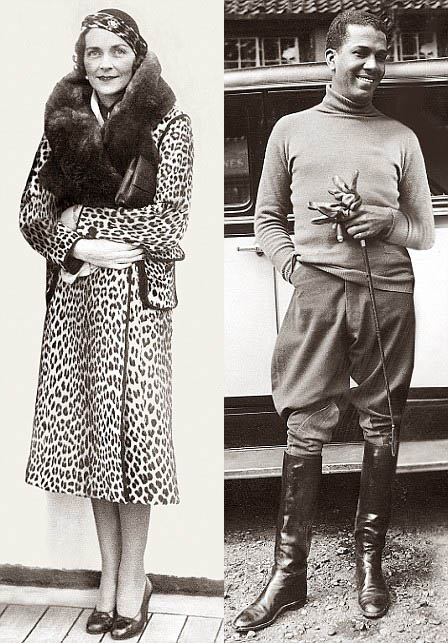
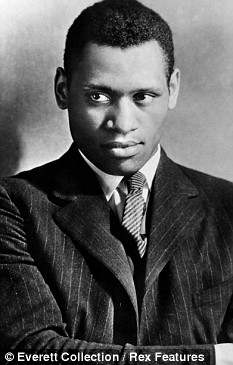
                                       Scandal: Countess Mountbatten sued The People newspaper over claims she had an affair with singer Paul Robeson

The man widely identified as her lover was the American actor and singer Paul Robeson. ‘It is most incredible,’ wrote Robeson’s wife, Essie, ‘that people should be linking Paul’s name with that of a famous titled Englishwoman, since she is just about the one person in England we don’t know.’

So, if not Robeson, who was it? According to a startling new C4 television documentary, Edwina’s lover was, in fact, the sleek, sophisticated and  –  according to legend  –  sensationally well-endowed West Indian cabaret singer and pianist, Leslie ‘Hutch’ Hutchinson.

Among the many amazing claims put forward in the documentary is the suggestion that Edwina commissioned Cartier to design a diamond-encrusted penis sheath for Hutch.

It is further alleged that the ‘compromising circumstances’ referred to in The People article concerned Hutch and Edwina becoming inextricably locked together sexually through a rare medical phenomenon known as vaginismus  –  which led to them being taken in flagrante delicto from the Mountbatten residence, Brook House in Park Lane, to a private hospital where doctors separated them.

Even allowing for Edwina’s lifelong reputation for promiscuity, can such outlandish claims possibly be true?

According to her official biographer, Dr Janet Morgan (in private life, Lady Balfour of Burleigh), the story is ‘piffle’.

But should we believe Dr Morgan? After all, she was recommended as official biographer to Edwina’s daughters (the present Countess Mountbatten and Lady Pamela Hicks) by their father’s official biographer, Philip Ziegler, whose 1985 study of Mountbatten blandly ignores all pointers to its subject’s own wild sexual antics.

Both official biographies  –  of the Countess and Mountbatten himself  –  are Establishment-friendly, and both deliberately omit clear evidence, in Mountbatten’s own handwriting, of his extra-marital interest in the reigning society beauty of the day, Margaret Whigham, afterwards the notorious and sexually licentious Duchess of Argyll.

The TV documentary offers compelling evidence that Edwina’s activities with Hutch became increasingly brazen, and were bitterly resented by her husband.

Yet he sat beside her in court to hear Norman Birkett, one of the greatest advocates of the day, telling the judge: ‘It is not too much to say that it [The People article] is the most monstrous and most atrocious libel of which I have ever heard.’

Both Mountbattens went into the witness box, Edwina to state on oath that she had never in her life met the man referred to in all the gossip (Robeson), and Dickie to swear that his wife was never exiled on the orders of Buckingham Palace  –  the only reason for her presence in Malta was because he was serving there as an officer in the Royal Navy.

The People, which had spent the staggering sum (for those days) of £25,000, trying to find evidence to support its story, failed to come up with a viable defence, leaving its barrister, Sir Patrick Hastings, to make a grovelling apology  –  ‘genuine and deep regrets’  –  on behalf of the newspaper’s owners.
 4-5

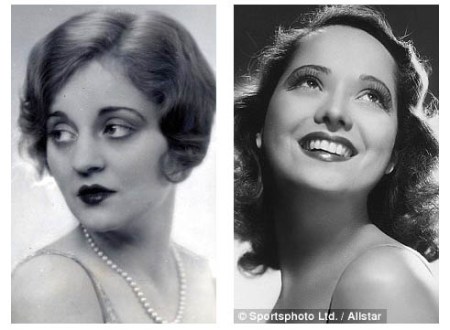
 Screen sirens: Leslie Hutchinson added Tallulah Bankhead (left) and Merle Oberon to his conquests

Edwina, awarded full costs, declined damages. That evening, the Mountbattens gave a celebration party at the Cafe de Paris.

On the following day, in a display of royal solidarity, they were invited to lunch at Buckingham Palace by the King and Queen. A few days later, Edward Prince of Wales, who had been best man at their wedding, gave a party for them at York House.

Edwina, freed from the threat of social disgrace, and the exposure of the sham that her marriage had become, calmly went back to the black lover The People had failed to identify.

Leslie Arthur Julien Hutchinson was born on March 7, 1900, in Gouyave, a small fishing village on the island of Grenada. His parents saved hard to send him to the best local school and he became something of a child prodigy at the piano.

When he was 14, his father swept him off to a brothel, an experience which his biographer, Charlotte Breese, believes ‘frightened and distressed him: he lost something more important than he gained  –  his childhood innocence’.

At 16, his parents paid to send him to medical school in America, but he ditched his studies and headed straight for Harlem, capital of the jazz scene, where he married a black Anglo-Chinese girl, Ella Byrd, and fathered a daughter, Lesley.

His father cut off his allowance. For a while he was destitute, but not for long. His overpowering good looks impressed one of New York’s first families, the Vanderbilts, who scoured the art world for talent and introduced him to wealthy patrons of the jazz scene, where he soon made his name as a pianist alongside other jazz legends such as Fats Waller and Duke Ellington.

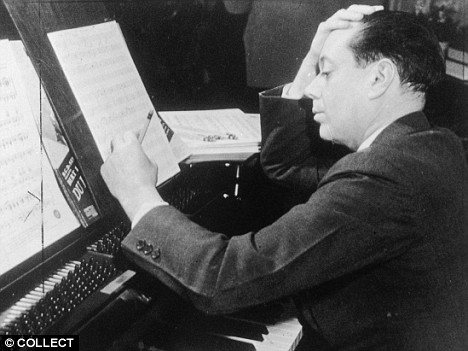
Arriving in Paris in 1924, and already flagrantly bisexual, he found a gay lover and patron in the composer Cole Porter, who wrote a hit song clearly based on Hutch’s character:

I should like you all to know 

I’m a famous gigolo, 

And of lavender my nature’s got just a dash in it…

 6

Hutch found a gay lover and patron in the composer Cole Porter

The handsome West Indian stud now added screen sirens Tallulah Bankhead and Merle Oberon to his conquests. In London, where he arrived in 1927, the West End’s leading male matinee idol, Ivor Novello, also became his lover.

The biggest musical star of the day, Jessie Matthews, after a performance, heard Hutch singing to his own piano-playing in the orchestra pit one night. Transfixed by his melodious, dark velvet voice, she immediately urged him to become a solo cabaret performer.

Within a year, he had won recording contracts and had become a highlypaid headliner at top London nightspots the Cafe de Paris, the Cafe Anglais and Quaglino’s.

He bought a Rolls-Royce, a grand house in Hampstead, patronised London’s best tailors, spoke five or six languages and was on friendly terms with the Prince of Wales.

But he was still a black man in an era of racial discrimination. When he entertained at lavish Mayfair parties, his fee was large, but he was often obliged to go in by the servants’ entrance. This embittered him.

Evelyn Waugh satirised Hutch as the social-climbing upstart, Chokey, in his novel, Decline And Fall. ‘He’s just crazy to meet the aristocracy, aren’t you, my sweet?’

Replies Chokey: ‘I sure am that.’ Says Mrs Clutterbuck: ‘I think it’s an insult bringing a n***** here.’

The first scandal surrounding him came in 1930, when he made the debutante Elizabeth Corbett pregnant. Her father vowed vengeance and pursued Hutch through the courts.

Elizabeth managed to get a Guards officer to marry her. They had a society wedding in Sloane Square but she was already three months pregnant, and it was not until she was in labour that she warned her husband the baby might be black. He was appalled. The child was removed at birth and put up for adoption.

 7

‘Open marriage’: Louis and Edwina Mountbatten

But the enduring scandal of Hutch’s life was his relationship with Edwina Mountbatten. A BBC producer, Bobby Jay, recalled their outrageous behaviour to Hutch’s biographer, Charlotte Breese: ‘I was at a grand party.

‘Edwina interrupted Hutch playing the piano. She kissed his neck and led him by the hand behind the closed doors of the dining-room. There was a shriek, and a few minutes later she returned, straightening her clothes.

‘Hutch seemed elated, and before he returned to the piano, told me that, with one thrust, he had flashed [propelled] her the length of the dining-room table.’

Although both had their liaisons, there can be no doubting the distress the affair caused Mountbatten. The reality was that he was unable to satisfy his sexually voracious wife.

Edwina showered costly keepsakes on Hutch: a jewelled gold cigarette case, a gold ring with her coat of arms engraved on the inside and a gold and diamond watch.

One night, a visibly distressed Mountbatten stumbled into Quaglino’s restaurant and told the bandleader, Van Straten: ‘I am lonely and sad and drunk. That n***** Hutch has a p**** like a tree-trunk, and he’s f****** my wife right now.’

Hutch was to pay a heavy price for the affair. After The People case, Buckingham Palace refused to have him on any Royal Command Performance bill, and Lord Beaverbrook gave orders that Hutch’s name was never to be mentioned again by any of his papers.

During World War II, Hutch was one of the first stars in Britain to volunteer his services to entertain the Forces, but he received no formal recognition for this and his name would never appear in any Honours list.

He added possibly two members of the Royal Family to the notches on his bed-post. One was the Queen’s aunt, Princess Marina, Duchess of Kent.

The other, allegedly, was Princess Margaret, with whom Charlotte Breese believes Hutch enjoyed a ‘brief liaison’ in 1955, when she was 25 and he was 55.
8

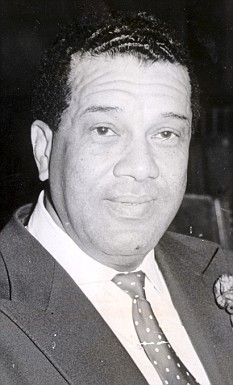
Hutch, pictured in 1954

His role in Edwina’s life was now over. During her years as Vicereine of India, she replaced Hutch with another deeply passionate relationship  –  with India’s first Prime Minister Pandit Jawaharlal Nehru.

There are those who suspect that Nehru, like both Mountbattens, had bisexual tendencies, and that Dickie, possibly in a last, despairing attempt to maintain physical contact with his unresponsive wife, may have joined them in a bizarre menage a trois.

During the Sixties, the daughter of a BBC producer regularly watched Mountbatten entering a male brothel by the rear entrance in Grosvenor Mews, Belgravia.

In the late Seventies, before they succeeded in assassinating him, the IRA closely monitored Mountbatten’s involvement with teenage boys.

In 1958, Hutch’s wife, Ella  –  often mistaken by visitors to his Hampstead home as his housekeeper  –  died. He buried her in an unmarked pauper’s grave at a cost of £12. By that time, he had six children by different mothers, and was to father a seventh at the age of 64.

Edwina’s death in 1960 symbolised for Hutch the end of his golden days. The advent of The Beatles and of the disco era closed off most of his avenues of employment, and he was reduced at one point to performing at Butlin’s holiday camps in dates such as Skegness, or in end-of-the-pier shows where he was not top-billed.

In Weymouth, where, in 1944, he had entertained thousands of troops before the D-Day landings, he now played to a handful of people at the local theatre.

Drinking heavily, overweight, his face bloated and heavily made-up, his hair dyed, he was like a gargoyle of the once-beautiful black God who had conquered high society with his looks, his voice and his charm.

With his fortune squandered on gambling, he was forced to sell his house in 1967 for £13,037. Of this, £10,000 went to pay off his debts, leaving him just £3,000 out of the millions he had earned.

He moved into a tiny flat, where he sometimes attempted to cadge money from his teenage son, the singer Chris Hutchinson.

When, on August 18, 1969, now ‘ virtually penniless’, he died at the Royal Free Hospital, Hampstead, from ‘ overwhelming pneumonia’ at the age of 69, he left a mere £1,949 and no will. Only 42 mourners showed up at his funeral.

There was to be a bizarre epilogue. On the day of his burial, the undertakers, J.H. Kenyon, received a call from Lord Mountbatten offering to pay for Hutch’s grave and tombstone in Highgate Cemetery.

Was it a final gesture of revenge on his sexual rival? Or did Mountbatten wish to ensure that the man Edwina had loved, and who had taken her from him, had a suitable final resting place?

This article was written by MICHAEL THORNTON  and appeared inDaily Mail Logo

UPDATED: 15:40 EST, 14 November 2008