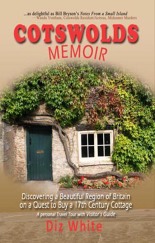
Visit the Cotswolds Village of Bampton featured in Downton Abbey

A Downton Day Out

A Tour of Bampton’s Downton Abbey Locations 

by

Diz White

Author of

Cotswolds Memoir:

Discovering a Beautiful Region of Britain
on a Quest to Buy a 17th Century Cottage

Highclere Castle, Location for Downton Abbey- Daily Mail

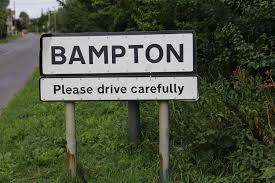
The charming village of Bampton in the Cotswolds is used as a background to a number of outdoor scenes in the immensely successful television series Downton Abbey and this lovely spot is well worth a visit. Not only is it interesting to see where scenes of Downton Abbey are shot but there are many other attractions in Bampton that would make a leisurely sojourn there very memorable.

Bampton, or as it was once known Bampton-in-the-Bush, is situated in the county of Oxfordshire in the Thames Valley and is about four and a half miles southwest of Witney.

Visitors strolling around Bampton will recognize a number of buildings and streets that were used in scenes in Downton Abbey.

St. Mary’s Church

One of the locations frequently filmed in the series is Bampton’s church, St Mary of the Virgin which dates from the 12th Century. This church, like many ancient buildings in Britain was built on the foundations of an earlier structure and incorporates parts of the older building in the new edifice. In this case, St. Mary’s church was erected on the site of an Anglo-Saxon Minster. The tower was the only feature of the Minster that was spared and it is now part of the Church. St. Mary’s is also distinguished by its magnificent 13th Century spire.

William the Conqueror gave this church to the Bishop of Exeter and it has been rebuilt and added to many times through the centuries.

Cottage Hospital

Another location used in filming is Bampton Library which was used as the entrance to the cottage hospital that was portrayed in the second series of Downton Abbey.

According to Pevsner and Sherwood’s book The Buildings of England this library was once the Grammar school of St. Mary’s church and was built in 1653.

Isobel Crawley’s house

The Old Rectory which is close by St. Mary’s Church is used for the exterior shots of Isobel Crawley’s house in Downton Abbey. The south side of this building is late 17th Century and features five bays. The back of the house is older with a 16th century arched stone doorway and in the garden wall there is a stone inscribed with the date 1546. Next to the Rectory are 17th Century stables with a gabled dovecote built over them.

The interior scenes of Isobel Crawley’s house, however, are filmed at Hall Place near Beaconsfield in Buckinghamshire.

Crawley_House interior

Downton Abbey’s conception

Downton2

The series is set in the fictional Downton Abbey, a Yorkshire country house, the grand home of the Earl and Countess of Grantham, and follows the lives and fortunes of the aristocratic Crawley family and their servants through the reign of King George V.

matthew-and-mrs-crawley-arrive-in-their-new-home

Gareth Neame of Carnival Films originally conceived the idea of an Edwardian-era TV drama set in a country house and suggested this concept to Julian Fellowes, who had won an Academy Award for Best Writing in the category of Original Screenplay for Gosford Park.

Car

Shortly, thereafter, Julian Fellowes gave Gareth Neame an outline of the first series. Julian Fellowes writes the series, and his wife Emma acts as his story editor.
sign

Bampton Annual Events

In addition to Bampton being used for locations of Downton Abbey this beautiful town features plenty of Cotswolds character and is well known for several quaint traditions that take place every year and have been doing so for the past several centuries. Visitors would do well to time a visit to take in one or more of these fun-filled events after viewing the Downton locations.

Shirt Race

Bampton Shirt Race

Once a year, on the Saturday of the Spring Bank Holiday there is a bizarre pub crawl organized by the Society for the Preservation of Ancient Junketing known as The Bampton Shirt Race. In past times the runners in this race were dressed in night-gowns and would compete in pairs with one runner pushing the other in a trolley. There was a time when there were fourteen pubs in Bampton and the race stops at every location for the competitors to down a large quaff of beer. Many of those public houses have now been converted to private residences but a stop at these former pubs is still included in the race. Nowadays, the race consists of larger teams using many different kinds of cobbled-together wheeled vehicles, such as prams, wheelbarrows and even wheelybins. These are used to transport the competitors who are costumed in outlandish fancy dress. There are prizes for the best outfits.

Morris Dancers

Morris Dancing

Bampton is well known for its Morris dancing which has been practiced in the village since the late eighteenth century. The town supports three world-renowned Morris Dance teams and the dancing is performed throughout the Monday of the Spring Bank Holiday in the latter part of May, beginning at 8.30 a.m. In the evening, visiting teams join in the dancing. Much is made of the traditional fertility cake which everyone samples as it is carried around the streets with the dancers.

Bampton002

May Garlands

The charming tradition of May Garland making by the children of Bampton began several centuries ago. It takes place at 11a.m. in the market square on the Monday of the Spring Bank Holiday.

Donkey derby

Donkey Derby

A Donkey Derby is run on the Monday of the August Bank Holiday, and organized by the Society for the Preservation of Ancient Junketing. This begins at 2 p.m. at Sandford’s Field. In addition to the donkey races (all the jockeys are children) there are bric-a-brac stalls, skittles, Aunt Sally, crockery smashing and much more.

mummers2

The Mummers

The Mummers perform plays on Christmas Eve every year. These plays have been performed since the nineteenth century in Bampton but are most likely much older. These dramas have been handed down through family tradition by word of mouth as no scripts exist. In the Bampton version there are ten characters including Robin Hood, Father Christmas, a Prussian King, St. George etc. The plays are uniquely performed in two acts instead of the customary one. Pagan rituals may have figured in the original plays as the plot involves many scenes of characters being finished off and then magically being brought back to life. This could perhaps symbolize the end of the old year and the beginning of the new. Watching the Mummers perform is a wonderful highlight of the Christmas season.

Ladies

Ladies of Downton Abbey

Bampton Pubs and Restaurants

After all this fun a little refreshment might be in order.

The Romany Inn On Bridge Street in Bampton is an unassuming pub serving typical but good pub food.                                                               Accomodation available.  www.TripAdvisor.com

The Horse Shoes On the High Street in Bampton. No food or accommodation http://www.bamptonoxon-                                                                                       parishcouncil.gov.uk

The Trout at Tadpole Bridge Is well known for its fine dining and serves the best food for miles around. It is  just five minutes’ drive down the road from Bampton in Buckland Marsh Diners come as far away as London to eat at this excellent riverside gastro-pub. In summer there are tables in the garden which leads down to the Thames. Stroll by the river with a pre-dinner drink. Accommodation available. www.trout-inn.co.uk

WHATLEY MANOR HOTEL & SPA Easton Grey Malmesbury SN16 ORB Tel: 01666 822 888 www.whatleymanor.com
Although this recommendation for accommodation is a fair drive from Bampton the visitor who stays here would enjoy a wonderful  tour of the Cotswolds on the way to this excellent  hotel and spa.
Whatley Manor is a AA 5 star ‘Inspectors’ Choice Hotel’ and a member of Relais & Châteaux
This beautifully appointed hotel with the most wonderful gardens is this author’s pick for the best luxury stay in the entire Cotswolds with its relaxing spa treatments, sublime cuisine and exceptionally attentive and friendly service.

Cotswolds Memoir:

Cotswolds Memoir_DizWhite

Discovering a Beautiful Region of Britain
on a Quest to Buy a 17th Century Cottage
(Larrabee Libraries)

A portion of the proceeds of every copy of this author’s book COTSWOLDS MEMOIR: Discovering a Beautiful Region of Britain on a Quest to Buy a 17th Century Cottage is donated to Cotswold conservation institutions. Available on

a.com_logo_RGB
        amazon


Cotswold New Born Calf with Wobbly Legs

  The first clue ….. one cow stayed back from the others who all moved off when they spotted the farmer in the next field putting out their feed.  But why? This herd usually stayed together but not this time.

I was watching this scene from my cottage in the Cotswolds – the one I describe in my book COTSWOLDS MEMOIR: Discovering a Beautiful Region of Britain on a Quest to Buy a 17th Century Cottage. My land overlooks a meadow and I really enjoy watching the cows ripping at the grass and munching away. Somehow this is a very calming sight.

At first I thought this lone cow might be ailing in some way. Then I looked through my binoculars and realized that this lovely animal was giving birth.

Soon a gangly-legged calf appeared and Mama Cow licked her and fussed over her while my husband and I rushed to get a camera. When we returned this calf, born moments earlier, was learning to sit down for the very first time.

Cotswolds Memoir Author writes History of Downton Abbey location

Downton Abbey (Highclere Castle)
Architectural History
By
Diz White

Author of

Cotswolds Memoir:

Discovering a Beautiful Region of Britain
on a Quest to Buy a 17th Century Cottage
(Larrabee Libraries)

Available on Amazon

Cotswolds Memoir_DizWhite

Highclere Castle, Location for Downton Abbey- Daily Mail

Highclere Castle, Location for Downton Abbey

Highclere Castle – the location of the successful T.V. Series Downton Abbey has brought the Victorian and medieval mansions and stately homes of England back into worldwide focus.
The huge success of the T.V. series Downton Abbey which uses Highclere Castle as its location has sparked great interest in British architecture and put a spotlight onto these ancient mansions and stately homes. This interest, may, in fact, be instrumental in stopping the decline of these buildings whose numbers have been traveling on a slow downward trajectory since the First World War. The curiosity aroused by this incredibly popular series has promoted a thirst for knowledge about British architecture and history from around the world.

Highclere2Highclere Castle Today

Highclere Castle as it exists today was rebuilt between 1839 – 1842 for the third Earl of Carnarvon by Sir Charles Barry, the architect of the Houses of Parliament. The architectural style of this latest version of Highclere Castle is classed as Jacobethan and its fascia material is of stone from the town of Bath.
John Betjeman gave the name ‘Jacobethan’ to the style of architecture incorporating elements of both Elizabethan and Gothic characteristics. This English Renaissance style that was popular from 1550 to 1625 was revived in the 1820s and evolved into the Jacobethan style.

MentmoreMentmore in Buckinghamshire an example of Jacobethan architecture

This fashion subsequently became the hallmark of Victorian architecture and included features such as Tudor-style terra cotta bricks, arches and extended chimneys, elaborate carved brickwork, balustrades, pillars and parapets. Sandringham House in Norfolk, home of her Majesty the Queen represents a good example of this Jacobethan style.

Highclere Castle origins, like so many castles, mansions and stately homes in Britain, go back to medieval times and beyond. An Anglo-Saxon charter indicates that this site has been populated for almost 1400 years.

Architectural Plans for Highclere CastleArchitectural Plans for Highclere Castle

It was the custom of British architects, through the centuries, to build upon the foundations of earlier buildings and on occasion to incorporate parts of these buildings into the new structure. The Victorian architects followed this trend by erecting the current Highclere Castle on the exact site of an earlier mansion. This earlier building was constructed on the foundations of the medieval palace of the Bishops of Winchester who had retained possession of this large estate since the 8th Century. An even earlier building was recorded as existing on this site in the Domesday Book.
The Carnarvon family have owned and lived in Highclere since 1679.

earl of pembroke8th Earl of Pembroke

In 1692 Robert Sawyer left what was then a mansion named Highclere to his daughter Margaret, wife of the 8th Earl of Pembroke. Their son Robert Sawyer Herbert inherited Highclere and became the owner of this mansion. He created the garden rooms and assembled a collection of paintings. Robert Sawyer’s heir Henry Herbert was created 1st Earl of Carnarvon by King George III.

Earl of Carnarvon1st Earl of Carnarvon

This is the description (in part) of Highclere Castle given by the famous architectural historian Nicholas Pevsner and his co-writer David Lloyd.

The house is ashlar-faced, of three storeys with an additional storey in the accentuated parts. The windows are of the mullion-and-transom-cross type, with transoms higher up than in genuine Elizabethan houses. At the top is a strapwork balustrade. The front is much flatter than an Elizabethan front would be. There is in fact very little decoration – just ornamented pilasters in stressed places. ‘Ung Je Serviray’ carved above all the ground floor windows.

5th Earl of Carnarvon5th Earl of Carnarvon

During the Victorian era Highclere Castle became a nexus of social and political activity. A stream of socialites, politicians, technical innovators, aviators, soldiers, writers and Egyptologists populated the parties at the house. The 5th Earl of Carnarvon discovered the tomb of Tutankhamen with Howard Carter adding another exotic aspect to the rich history of the Carnarvon family and their Castle. An Egyptian exhibition is a feature of Highclere Castle today.

Book.indd

During the First World War Highclere Castle was turned into a hospital by Amina the 5th Countess of Carnarvon and treated soldiers wounded in Flanders in September 1914. The Castle became a private home again in 1922. The Castle was used once more in the Second World War as a home for evacuated children from London.
Today the 8th Earl and Countess of Carnarvon live for part of the year in the Castle and the remainder of the time in a nearby home.

Highclere Castle LibraryHighclere Castle Library

Only the ground floor rooms are in use at the present time and these include the Foyer, Saloon, Library (which contains almost 6000 books, some of which date back to the 16th Century), Music Room, Smoking Room, Drawing Room and Dining Room (in which hangs Van Dyck’s painting of Charles I)

charles-iCharles I by Van Dyck

There are 11 bedrooms on the first floor of Highclere Castle with approximately 60 bedrooms on the upper floors.

It is hoped that the success of Downton Abbey will help bring the public’s attention to the often sorry plight of Britain’s stately homes. The Society for the Protection of Ancient Buildings is fighting to save historic and listed buildings from decay, demolition and destruction. Web site www.spab.org.uk

A portion of the proceeds of every copy of this author’s book COTSWOLDS MEMOIR: Discovering a Beautiful Region of Britain on a Quest to Buy a 17th Century Cottage is donated to Cotswold conservation institutions.

Available on

a.com_logo_RGB
   amazon

Cotswold Cows in the Mist

Misty Cows 1

One early morning in the beautiful Cotswolds I made a cup of tea and took it into the conservatory where I was amazed to see a thick mist enveloping the field view. Instead of the usual couple of hundred yards of fields, trees and hedges I could see for only a few yards beyond the dry stone wall. As I sipped my hot tea the mist began to slowly swirl, making fantastic shapes as it curled around the edges of trees and gradually lifted a little off the ground. After a few more minutes a low moo heralded a cow, wreathed in mist, as it emerged in the field like a sepia painting in soft focus.

Misty Cows 2

Cotswold cows are among my favourite creatures and this one was enhanced even more by the soft focus treatment of this gently dissolving background.

 Misty Cows 3

As more cows joined the first one Randy my husband grabbed his camera and was able to capture their images before the mist was dissolved by the warm sun. Eventually the day evolved into a glorious scorcher – perfect for a picnic on the river.

But I’ll never forget those magical, early morning moments when my lovely Cotswold cows appeared to be part of a Turner painting.

Misty Cows 4

Christmas COTSWOLDS LAMB Pie

Christmas PieFrom Diz White, the author of

COTSWOLDS MEMOIR: Discovering a Beautiful Region of Britain on a Quest to Buy a 17th Century Cottage

Available in E-Book and Paperback on Amazon

This pie is great for Christmas evening when everybody thinks they can never eat another thing and then surprise, get peckish just before bed-time. You could even serve it for Christmas dinner!

Delicious served hot or cold!

Follow this recipe and out of the oven comes the most scrumptious-looking country pie; looking like something you’d see on the table in Downton Abbey or the kind of thing Mrs Bridges would have cooked in Upstairs, Downstairs.

INGREDIENTS IN IMPERIAL MEASURE

(Ingredients in Metric measure are at the end of the recipe)

1 1/2lb Ground or Minced COTSWOLD Lamb

Cotswolds lamb is optional – other lamb is good to use. But Cotswolds lamb tastes so good.

2 Large Onions

4 Sticks of Celery

1 lb. Mushrooms

6 Cloves of Garlic

1 Egg whisked

1 Tin of chopped tomatoes or 4 fresh blanched tomatoes

½ Tin of tomato paste (optional)

1 Table spoon herbes de Provence

1 Teaspoon fresh chopped ginger (optional)

Pinch (large) of Cajun spices

1 Package ready-made puff pastry.

Recipe designed for a 9 Inch Pie Pan

Serves 6

This is my mother’s delicious recipe and I try and cook it the same way that she did.

Have the butcher take a shoulder of lamb and put it through the meat grinder. In England this is called minced lamb. In the United States it would be ground lamb. Get COTSWOLD lamb if you can.

Sauté the lamb in a skillet. When it is about half cooked take it off the heat and drain away any extra fat. Next, in a separate skillet, sauté onions, garlic, mushrooms, celery, tomatoes. Cook until all this is done about halfway through. Drain away any extra liquid. Now add seasoning and stir in well. The seasoning should include herbes de Provence, and other seasonings can be added to taste. e.g. Cajun spices, or a touch of curry powder. Or get creative with your own ideas about seasoning. I will sometimes add a tablespoon of chopped fresh ginger and ½ tin of tomato paste, but these are optional. Combine the ingredients of both skillets; stir well and aside to cool. Now prepare the pastry.

These days it is possible to buy ready-made puff pastry quite easily.

Roll out enough puff pastry and a line the pie dish with it. Next, roll out enough pastry for the top covering of the pie and cut it a good four inches larger than the pie dish. After filling the bottom with all the sautéed ingredients drape the overlarge pastry covering on top and pull the excess back into loops, rather like a curtain valance, before thumbing the top and bottom layers together.

Heart shapes and other decorations can be made with any left over pastry and placed on the top of the pie. Next, paint the top of the pie with a whisked egg. Put the pie in a pre-warmed oven and cook for about forty minutes or until the pastry is lightly browned.

Decorate with sprigs of holly with red berries or other Christmas decoration. Enjoy!

INGREDIENTS IN METRIC MEASURE

675 grams Ground or Minced COTSWOLD Lamb

Cotswolds lamb is optional – other lamb is good to use. But Cotswolds lamb tastes so good.

2 Large Onions

4 Sticks of Celery

450 grams Mushrooms

6 Cloves of Garlic

1 Egg whisked

1 Tin of chopped tomatoes or 4 fresh blanched tomatoes

½ Tin of tomato paste (optional)

30 grams herbes de Provence

5 grams fresh chopped ginger (optional)

Pinch (large) Cajun spices

1 Package ready-made puff pastry.

Recipe designed for a 22 cm Pie Pan

Serves 6

COTSWOLDS MEMOIR

Discovering a Beautiful Region of Britain on a Quest to find a 17th Century Cottage

An English actress and comedy writer returns from Hollywood to her homeland to buy a cottage in the Cotswolds,the most beautiful part of Britain. Her exciting search turns into a laugh-out-loud, good life, foodie, meet the eccentric locals, cliff hanging, explore the idyllic Cotswolds fun read as she finds the sense of community lacking in her urban existence and decides ‘It doesn’t get much better than this!’

Cotswolds Memoir Cover-2

What the Press say about COTSWOLDS MEMOIR

‘Extremely entertaining, funny and beautifully written’
Katie Jarvis, Cotswold Life Magazine

“Diz White writes about the Cotswolds with such passion. Superb story telling.”
Debbie McGee, BBC Radio Berkshire

“Wakes us up to the joys on our doorstep”
Sue Bradley, Gloucestershire Echo

“A rip-roaring new book”
Tristan Cork, West Country Life Magazine

“It’s enchanting …very funny…..Diz White has written a book that paints a nostalgic and affectionate canvas.”
Steven Leigh Morris, Los Angeles Weekly

“More entertaining than Under the Tuscan Sun”
Bill Greenleaf, Greenleaf Literary Magazine

From the Author

It all started with a family reunion. I wanted my family to come to my home for our next yearly gathering and I wrote a description of the Cotswolds to persuade them all to join me there. My sister wrote back that she had enjoyed my letter so much that she thought I should write a book about this lovely place. So COTSWOLDS MEMOIR is from my heart and expresses all my joy at discovering this very special region.  Writing this book encompassed all my passions – I’m a nature lover, a foodie, a history buff, a hiker, a lookey loo (I can’t get enough of viewing old houses) and I collect people – the more quirkily amusing the better. This book also allows me to share a very important part of my life – making people laugh. My comedy writing background was put to good use, however, this time I could tell my personal stories – funny things that really happened to me rather than having to invent scenes. Also, this book chronicles all the real-life ups and downs of hunting for a home. Because I see life though the prism of comedy much of this roller coaster adventure was hilarious to me so I had a lot of fun. Also it was always my Mother’s dream to own a cottage and I have been fortunate enough to live out that dream for her. I am also very fortunate to have my wonderful husband Randall Montgomery in my life without whom my book would never have been completed. He helped me with all aspects of my book including the cover, taking all the photographs, the marketing and formatting. If that is not enough he also serenades me with lovely old songs from the 1930s while strumming on his Ukulele.

Before writing Cotswolds Memoir I had been commissioned to write Haunted Cotswolds and Haunted Cheltenham which got me started exploring this region and studying its history and architecture – my art degree from Central/St. Martin’s art school came in handy here.  Of course, on the way I got to participate in all the great activities that the good life of the Cotswolds has to offer including: hog roasts, fetes, Roman settlements, the Cotswold Way, world-renown gardens, boating on the Thames, a myriad of historic sites, Domesday churches, pubs, restaurants and tea shops, farmers markets and all that this halcyon region has to offer.

I really enjoy hearing from my readers so do find me if you read my book and want to chat – easily done by Googling my web site – and going to the email on there.

I hope you enjoy my book as it was a pure delight to write Cotswolds Memoir and to share how I found my little bit of heaven.